
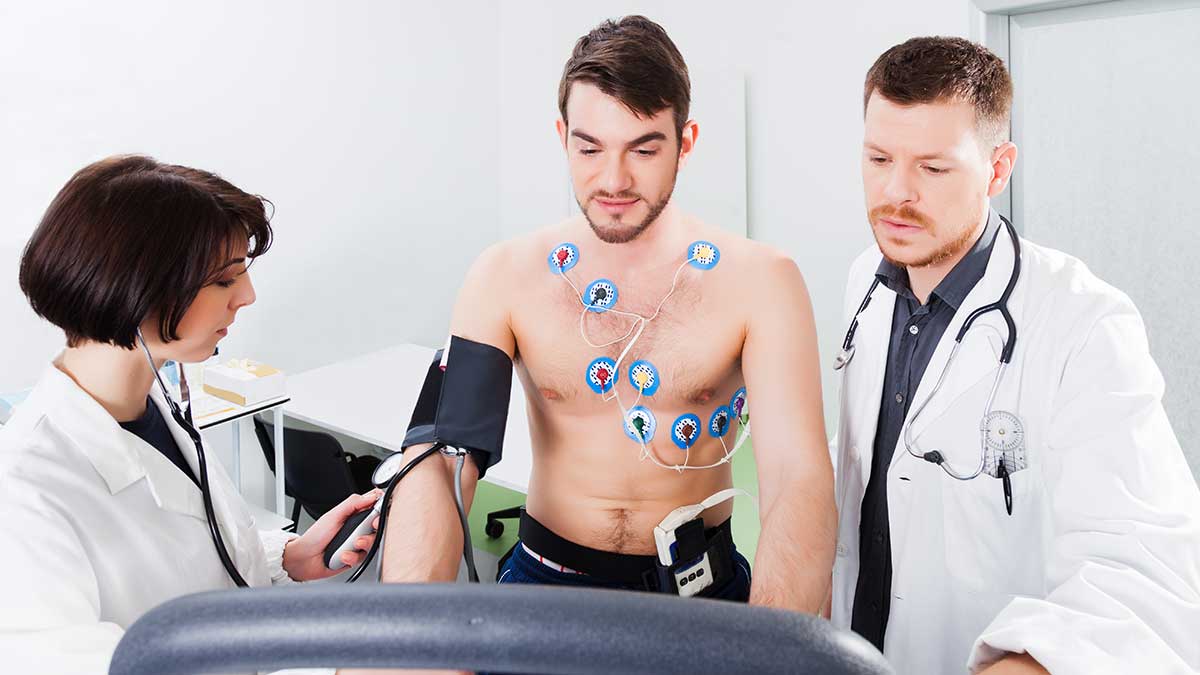
A Stress Test, also known as a Treadmill Test (TMT), evaluates how your heart functions under physical stress. It helps detect hidden heart problems that may not appear during rest. During the test, you walk or run on a treadmill while connected to machines that monitor your heart.
Doctors use TMT to:
The test mimics the effect of exercise on your heart, showing how well it pumps blood.
You’ll start walking on a treadmill with increasing speed and incline. Throughout the test:
The goal is to reach your target heart rate safely. If symptoms appear or results become abnormal, the test is stopped immediately.
It also boosts confidence in physically active patients with known heart disease.
Your doctor may recommend TMT if you have:
It’s also used as a preventive screening in individuals over 40 years with risk factors.
Before the test:
Proper preparation ensures better accuracy and safety.
Once the test ends:
You can usually resume normal activity the same day.
TMT is generally safe. Rarely, it may cause:
These issues are closely monitored and handled immediately.
Unlike ECG, which is done at rest, TMT shows how your heart performs under stress. It can reveal problems that a resting ECG might miss. It’s often the first step before more advanced tests like echocardiography or angiography.

MD, DM (CARDIOLOGY) Consultant interventional cardiology
Schedule a consultation with our experienced cardiologist and take the first step towards a healthier, stronger you.
Copyright © 2025 Dr. Praveg Goyal | All Rights Reserved